
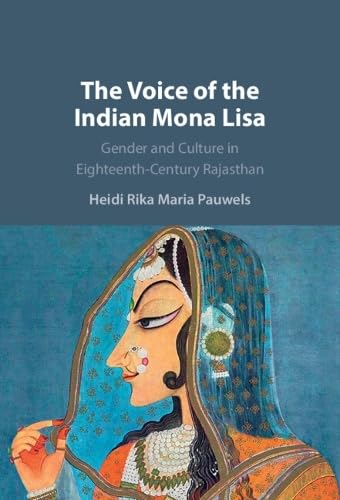
The Voice of the Indian Mona Lisa : Gender and culture in eighteenth-century Rajasthan
Material type: TextLanguage: English Publication details: New Delhi : Cambridge University Press, 2023.Description: xvi, 278pISBN:
 - 9781009201650
- Y15.237'M R3
 Textual
| Cover image | Item type | Current library | Home library | Collection | Shelving location | Call number | Materials specified | Vol info | URL | Copy number | Status | Notes | Date due | Barcode | Item holds | Item hold queue priority | Course reserves | |
|---|---|---|---|---|---|---|---|---|---|---|---|---|---|---|---|---|---|---|
|
Textual
|
South Campus Library | South Campus Library | Y15.237'M R3 (Browse shelf(Opens below)) | Available | SC1690743 |
The 'Indian Mona Lisa' is an eighteenth-century portrait of the goddess Radha from the Kishangarh school of Rajput Painting. It was purportedly modelled after a young enslaved woman and court-performer, Banī-ṭhanī, who became a concubine of the patron of the painting, crown-prince Savant Singh. Tracing her career, Heidi Pauwels recovers her role as a composer of devotional songs in multiple registers of Classical Hindi and shows how she was a conduit for trend-setting styles from Delhi, including the new vogue of Urdu. Through a combination of literary, historical, and art-historical analysis, she brings to life the vibrant cultural production center of Kishangarh in the eighteenth century by reconstructing how Banī-ṭhanī came to be acclaimed as the devotional poetess Rasikbihārī and as 'India's Mona Lisa'. This major new study conveys important new insights in the history of Hindi literature and devotion, the family, palace women and the social mobility of the enslaved.
There are no comments on this title.