
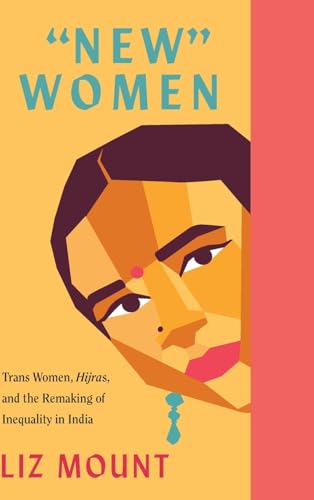
New Women: trans women, hijras, and the remaking of inequality in India
Material type: TextPublication details: UK Cambridge University Press 2024Description: 197p. Includes acknowledgement, index and bibliographyISBN:
 - 9781009343435
- Y15:3.2 R4
 Textbook
| Cover image | Item type | Current library | Home library | Collection | Shelving location | Call number | Materials specified | Vol info | URL | Copy number | Status | Notes | Date due | Barcode | Item holds | Item hold queue priority | Course reserves | |
|---|---|---|---|---|---|---|---|---|---|---|---|---|---|---|---|---|---|---|
|
Textbook
|
Ratan Tata Library | Ratan Tata Library | Y15:3.2 R4 (Browse shelf(Opens below)) | Available | RT1585262 |
Browsing Ratan Tata Library shelves Close shelf browser (Hides shelf browser)


Recent global attention to transgender issues and new opportunities for trans people can appear as positive and progressive social change. 'New' Women challenges this assumption through an ethnography of emerging trans women and traditional gender non-conforming hijras in India. In many countries, people identify as either cisgender or non-cis identities like transgender and nonbinary. India is unique for its recognized, yet stigmatized, gender non-conforming hijras. This book explores changes in hijra groups due to economic liberalization and LGBTQ+ advocacy, particularly the rise of the trans woman. Liz Mount locates trans women within patriarchal and postcolonial histories that shape ideal womanhood in India. As trans women align themselves with middle-class, respectable (cisgender) womanhood, they distance themselves from hijras, perpetuating their exclusion. Ultimately, this intersectional feminist analysis shows that new forms of gender identity can reinforce old inequalities and what appears as progressive change for some trans people can marginalize others.
There are no comments on this title.