
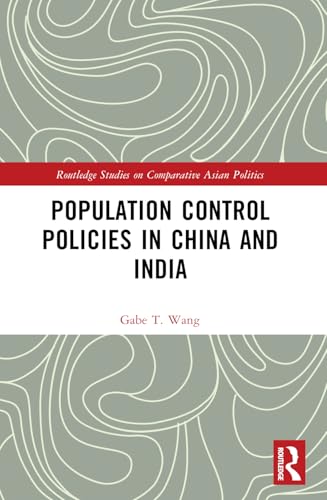
Population control policies in China and India: Comparisons with social and cultural factors
Material type: TextSeries: Routledge studies on comparative Asian politicsPublication details: London Routledge 2024Description: viii, 143 p. : ill. Includes bibliographical references and indexISBN:
 - 9781032309552
- Y:5.41 R4
 Textbook
| Cover image | Item type | Current library | Home library | Collection | Shelving location | Call number | Materials specified | Vol info | URL | Copy number | Status | Notes | Date due | Barcode | Item holds | Item hold queue priority | Course reserves | |
|---|---|---|---|---|---|---|---|---|---|---|---|---|---|---|---|---|---|---|
|
Textbook
|
Ratan Tata Library | Ratan Tata Library | Y:5.41 R4 (Browse shelf(Opens below)) | Available | RT1528448 |
This book comprehensively compares the development of population control policies in China and India, their implementations, and the population changes over the past seven decades.
Analyzing how populations have changed and affected socioeconomic development in the two societies, this book systematically compares China and India through social and cultural factors, including religion and traditional perspectives on population, ethnicity and language, social classes, family, social status and education of women, and government functions. A brief introduction discusses how China has developed into a highly homogenous society and how India has developed into a highly diversified nation in history, and the influence of other countries on these two societies. With empirical data, the book analyzes how population changes are strongly correlated with economic development in the two most populous societies. An insightful discussion of the population issues with a world perspective and historical understanding of China and India is also provided.
There are no comments on this title.